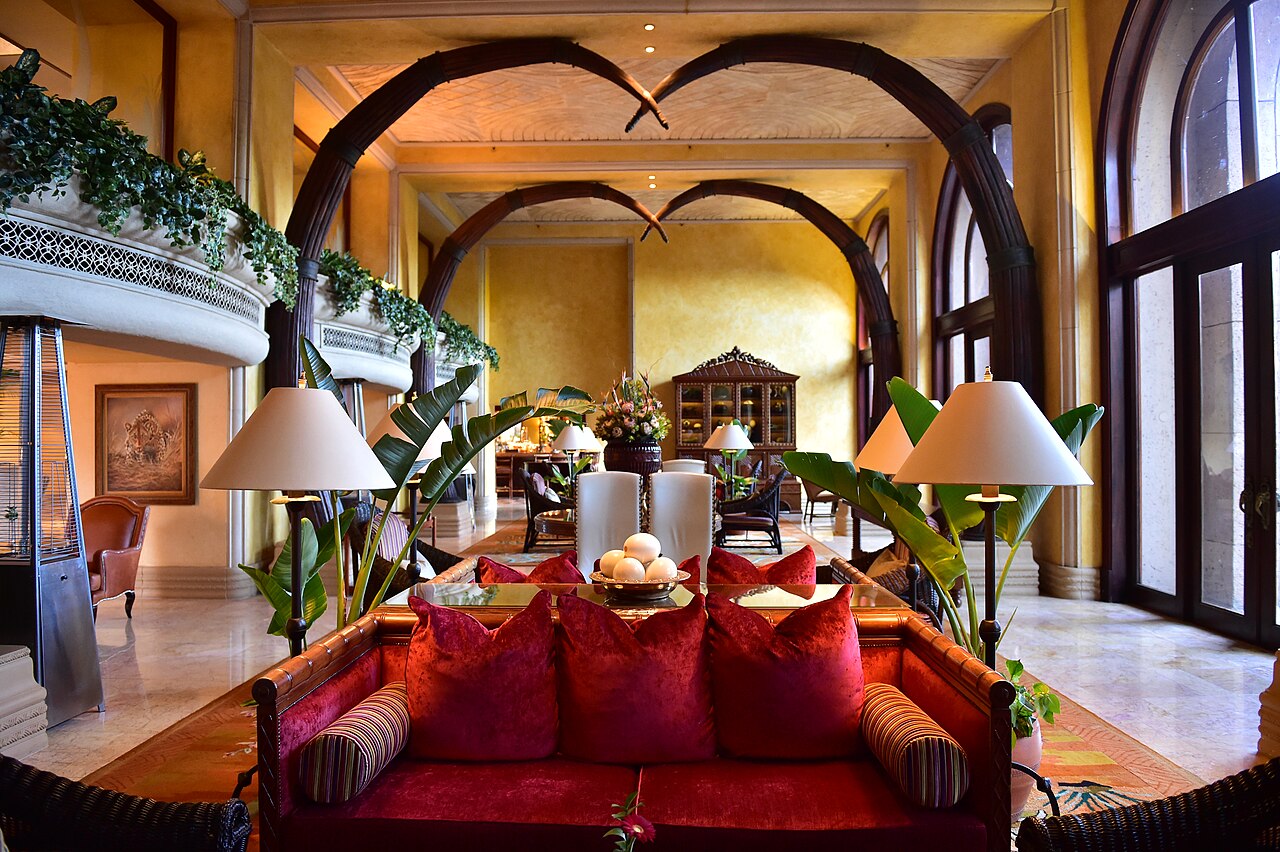
Continuing our journey around the world’s many different interior design traditions, we explore South Africa’s eclectic approach to contemporary home decor: a mix of traditional crafts, vibrant pattern and earthy tones... Plus tips on how you can use lighting to achieve some South African style in your own home…
It was the late Archbishop Desmond Tutu who dubbed South Africa the ‘Rainbow Nation’, as a sign of hope and in celebration of the country’s diversity and multicultural heritage. The end of apartheid in May 1990 marked the beginning of a new era across the country’s social, political, professional and cultural life, which is very much in evidence in contemporary South African interior design and architecture.
Visitors from around the world now flock to this vibrant country, drawn by its wildlife, stunning landscapes and temperate climate. At the same time, South African designers and architects are building national and global reputations.
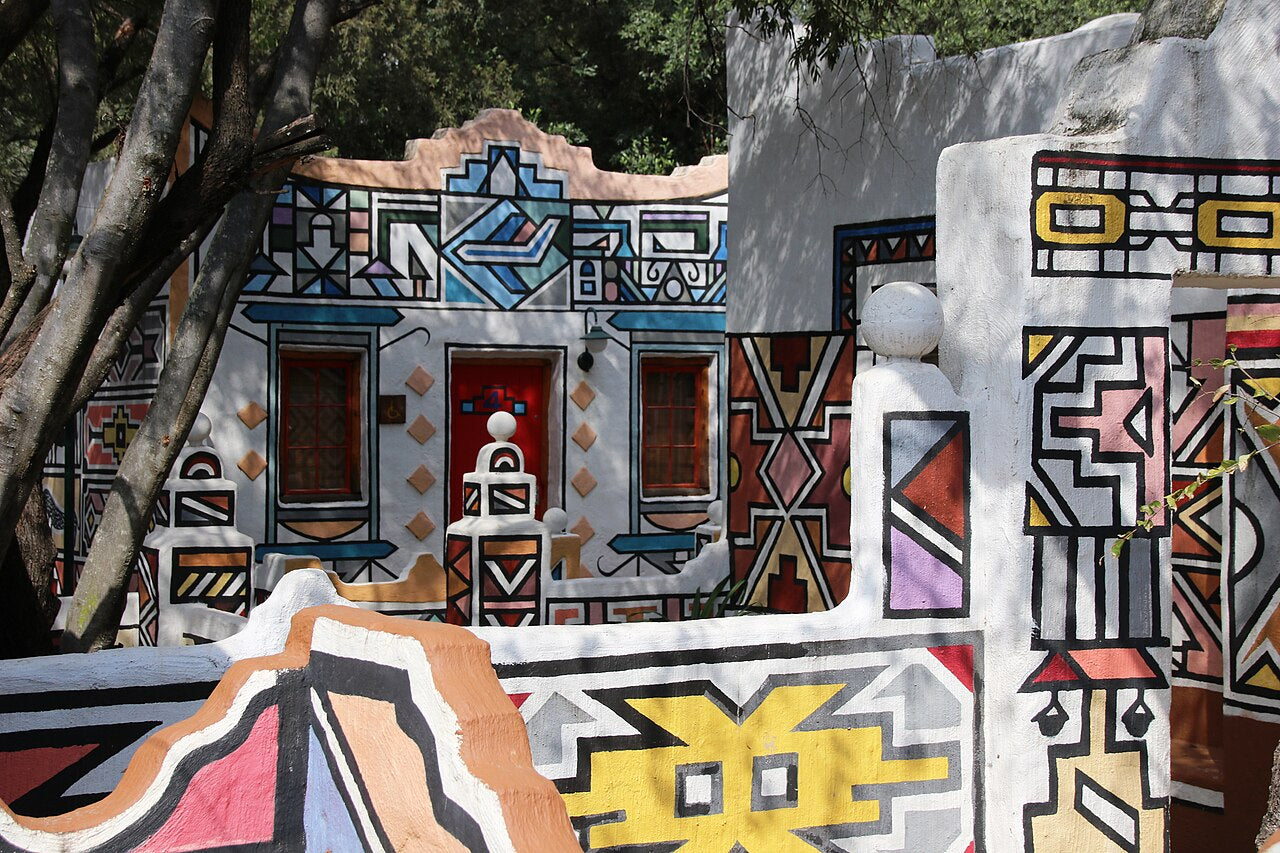
A rich architectural heritage
Today’s South African homes draw on many influences, including rondavels, the thatched circular huts of the Xhosa people; the beehive shaped iQukwanes created by the Zulu, and verandahs associated with huts built by the Venda.
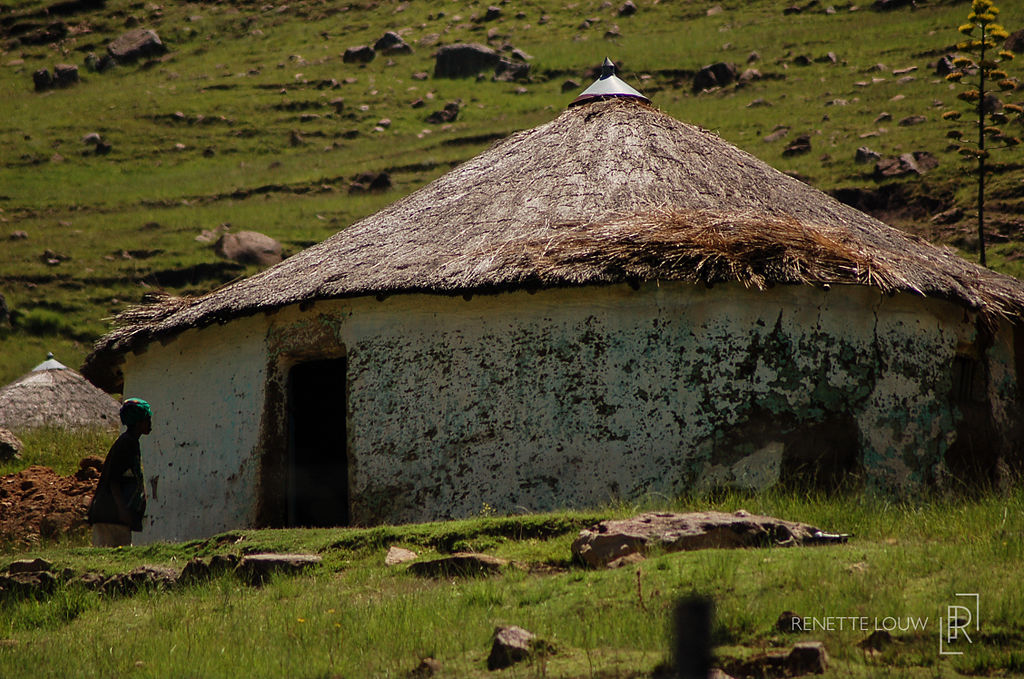
Traditional Xhosa rondavel. Via creative commons.

Cape Dutch architecture, with its instantly recognisable thatched roofs and whitewashed walls is the legacy of many generations of Dutch settlers. It remains a popular style across the Cape but is particularly prevalent in the wine region, Franschhoek and Stellenbosch in particular.

Cape Dutch architecture at Groot Constantia, South Africa’s oldest wine estate. Photo: Tjeerd Wiersma via creative commons
In complete contrast, Bo-Kaap, Cape Town’s former Malay Quarter, is renowned for its pastel and primary coloured houses, which date from the mid-19th century.

The ice cream colours of Bo-Kaap, Cape Town. Photo: South African Tourism via creative commons.
South African homes today, the key elements
Many South African interiors designers draw on the country’s diverse heritage and frequently opt for a fusion look, in terms of pattern, colour and traditional motifs.
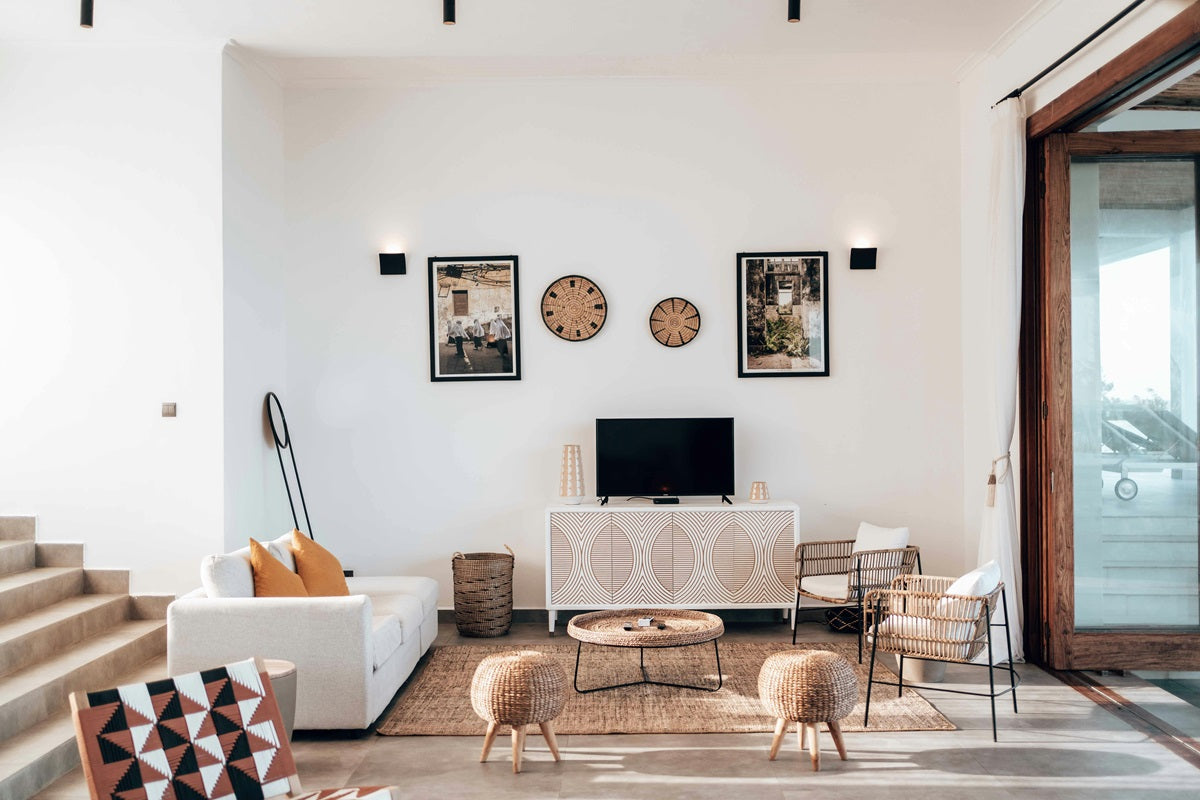
The modern pan-African look: natural light and a stylish blend of earth colours, natural materials and traditional crafts. Photo: Keegan Checks via creative commons.
There is increasing awareness of environmental issues and sustainable practices and the current generation of designers are likely to specify environmentally conscious design strategies, using eco-friendly materials, and incorporating energy-efficient features. The Lutge Gallery in Muizenberg, Western Cape, has a reputation for its stylish tables, cabinets and other furniture, designed by owner Allen Lutge and crafted from reclaimed indigenous wood. Lutge’s designs sit alongside the gallery’s range of Cape antiques, architectural salvage and contemporary crafts.

Interior, Jaci’s Lodges, Madikwe Game Reserve, North West Province. Photo: South African Tourism via creative commons
.jpg)
Here are some of the key contemporary South African interior design motifs:
- An emphasis on open spaces and maximising natural light from those big African skies; windows and skylights are large, and sliding doors lead to verandahs, decks and outside spaces, blurring the boundaries between indoors and outdoors.
- Natural materials such as clay, stone, thatch and wood are preferred, providing a sense of warmth and authenticity all while reflecting South Africa's natural beauty.
- Earth tones are everywhere, inspired by the South African landscape; expect to see plenty of ochre, sand, sienna, and terracotta, though strong, rich colours abound too.
- Animal prints and patterns, inspired by the country’s wildlife, including giraffe motifs, leopard spots and zebra stripes are perennial favourites.
- Indoor plants. South Africa’s plant life is as rich as its animal life, and indigenous plants such as aloes, grasses and succulents can be found in many homes. As well as adding freshness and colour, indoor plants reflect a growing interest in biophilic design schemes.
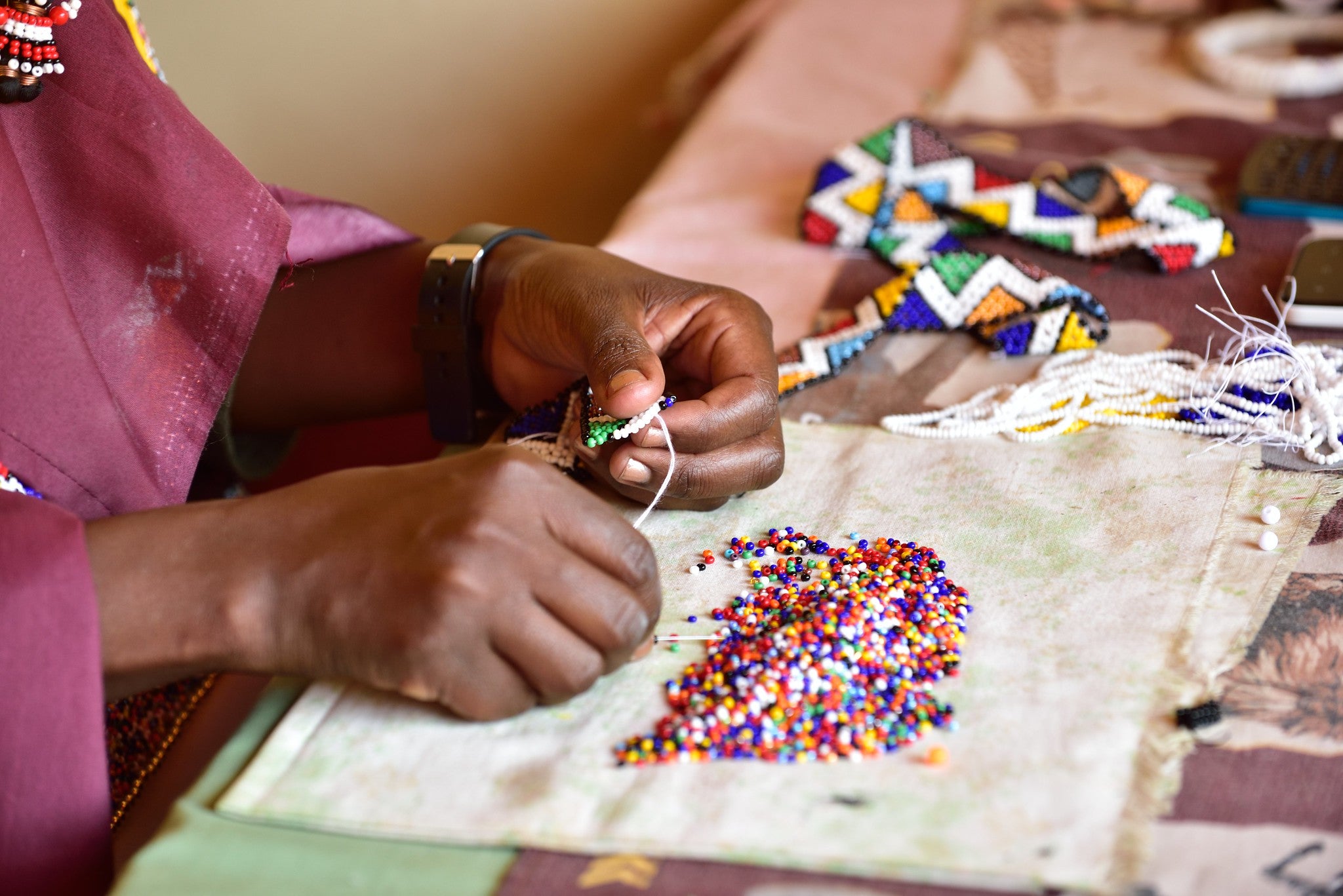
- Traditional handicrafts and tribal art and textiles, such as beaded artwork and cushions, carved masks and wooden furniture, pottery, wall hangings and woven baskets, are perennially popular features.
Contemporary South African interior design: three to follow
Interior design is one of the country’s growth industries and although Cape Town remains the country’s leading design hub, studios are springing up across South Africa, reflecting the demand for well designed, functional home and work spaces.
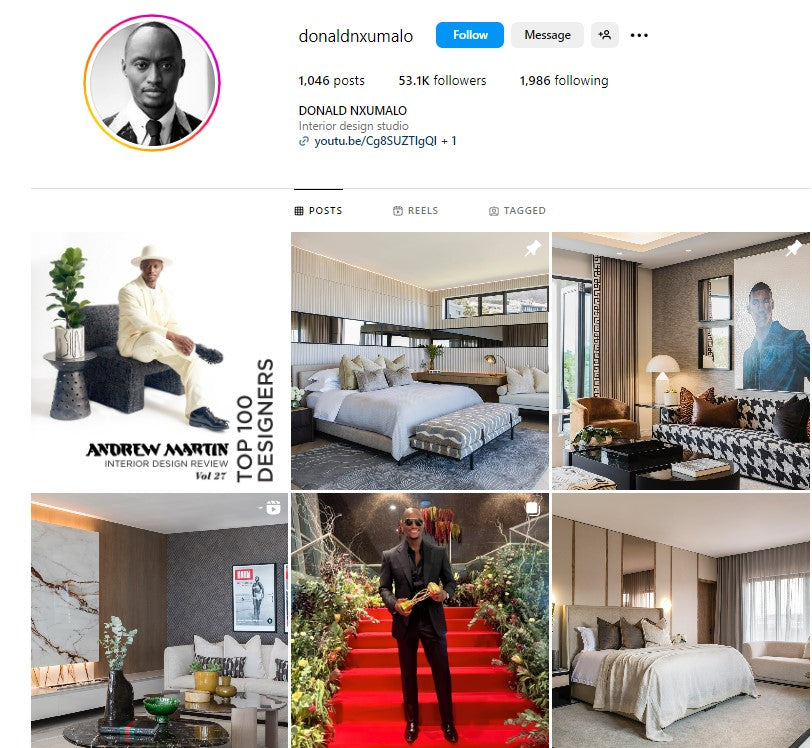
1) Donald Nxumalo (@donaldnxumalo). Donald grew up in Pretoria, where he became fascinated by antiques and historical artefacts. Now based near Johannesburg, he is committed to working ethically, within an entrepreneurial spirit. He views his approach as: “sophisticated, African, urbane and intuitive.”
2) Gregory Miller (@gregory.mellor.design). In 2023, Gregory Mellor became only the second South African (and African) designer to receive the prestigious Andrew Martin International Designer of the Year Award, following in the revered footsteps of Stephen Falcke in 1999. (Falcke is credited with revolutionising the way that African tribal art and textiles could be used in contemporary interiors.) With an international portfolio ranging from luxury game lodges in East Africa to classic holiday homes in the Pacific, Mellor likes to combine traditional and modern design, furniture and art to create interiors of “timeless elegance…authentic, eclectic…”
3) Karen Roos of Babylonstoren (@babylonstoren). A standout location that has been winning plaudits in recent years is Babylonstoren an estate owned by Karen Roos and Koos Bekker in the Western Cape’s Franschhoek wine valley. One of the oldest Cape Dutch farms, it now comprises a luxury hotel, cottage accommodation, a choice of restaurants, landscaped fruit and vegetable gardens, and vineyards. Karen, a former editor of Elle Decoration South Africa is the driving force behind Babylonstoren’s distinctive aesthetic. The interiors offer an evocation of the past, with skilful restoration and preservation work, blended seamlessly with 21st century design. Furnishings are simple, with the perfect balance of antique pieces.
But you don’t need to travel to the Southern Hemisphere to see an example of the couple’s Babylonstoren philosophy; simply head to Bruton in Somerset to The Newt. Their visionary UK venture, which has Hadspen House, the 300-year-old former home of the Hobhouse family at its heart, is now a stunning hotel, restaurant and garden, where Karen has added blended colourful, contemporary design with classical Georgian elegance.
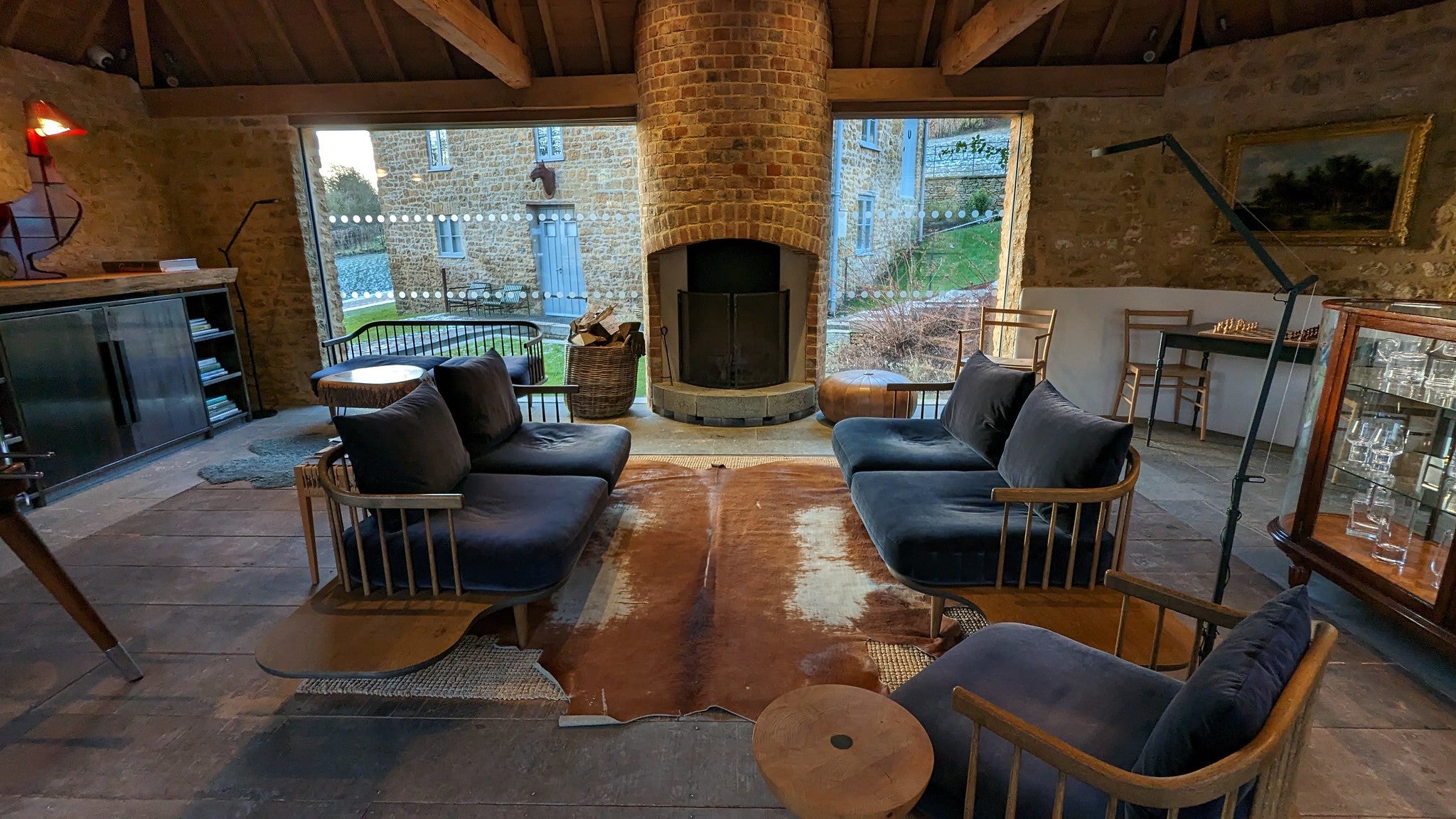
The Newt, Bruton, Somerset. Photo: André-Pierre du Plessis via creative commons
Get the South African look with lighting…
Keen on the South African look? Lighting is a smart and easy way to bring a touch of African-inspired style to your home. Here are some ideas to inspire you…
Handcrafted natural materials
The hand carved beauty of a dark wood table lamp has a South African vibe. A simple design and natural finish make this style of lamp wonderfully versatile, equally at home in a Mid-Century modern setting, country cottage, or 21st century minimalist apartment.

Our partnership with Collaborative Crafts Projects resulted in a fabulous range of Ilala palm basket pendant shades. Handwoven in Zimbabwe, across the border from South Africa, the four pendant styles are decidedly modern, while celebrating the best of traditional crafts and natural materials..

A natural woven palm basket pendant shade
Animal print
Master of colour and pattern, Matthew Williamson has reimagined the classic allure of animal prints in his leopard-print empire shades, painterly leopard spots coalescing into love-heart motifs.
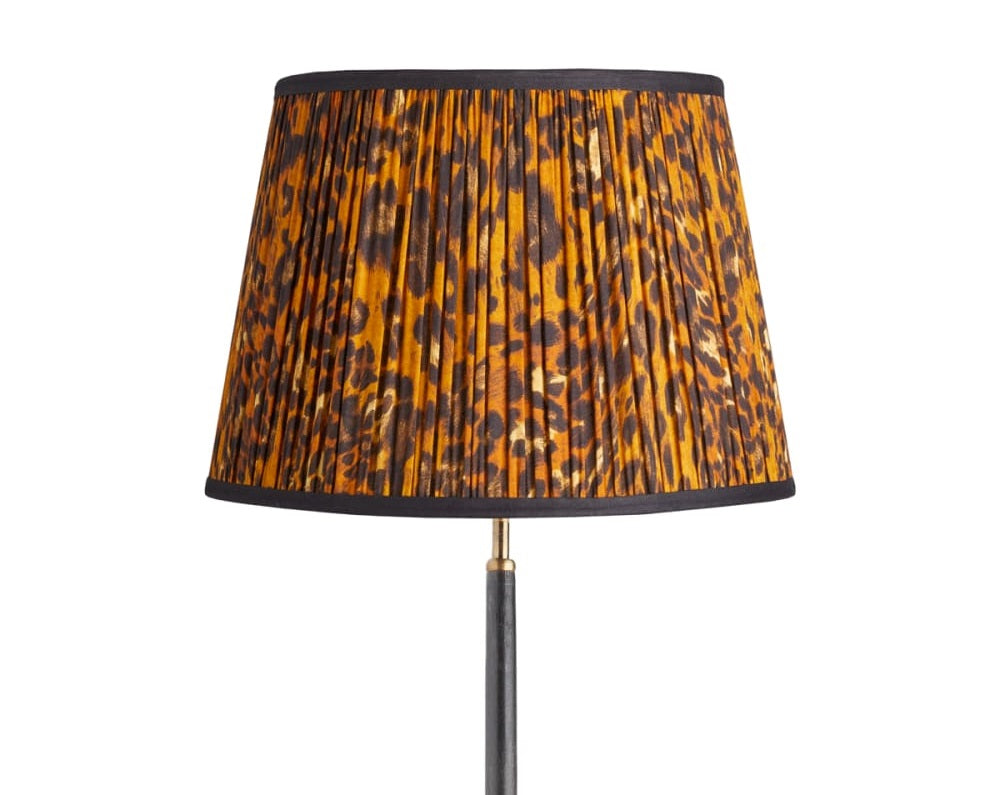
An empire shade in Matthew Williamson's leopard print design
Earth tones
A terracotta table lamp has earthy, natural tones and a traditional shape that works brilliantly with a contemporary shade for that modern South African mash-up style.
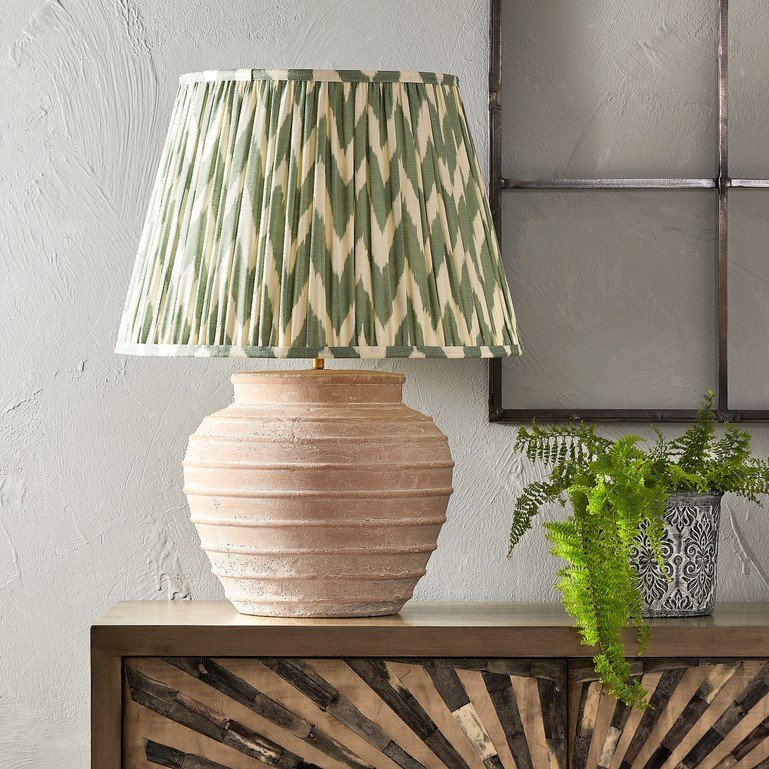
A natural terracotta table lamp
Image top: The Palace, Sun City, North West, South Africa (Photo: South African tourism via creative commons)

For more interior design inspiration, see our tips-packed blog, or continue the journey with the vibrant colour of Mexico or India's centuries of architectural heritage. Browse our Collaborative Craft Projects collection here.
FAQs about South African interior design
Is South African interior design the same as other African design styles?
No, South Africa's approach is distinct within the broader African design landscape. It blends Cape Dutch colonial architecture, indigenous Xhosa, Zulu and Venda building traditions, and a contemporary pan-African aesthetic, giving it a fusion character that's noticeably different from, say, Moroccan or East African interior traditions.
How can I mix South African interior design with other interior styles?
Keep it to one or two accent pieces in natural materials or earth tones, letting a single item do the work rather than layering several at once, whether you're working with a minimalist, coastal or classic scheme. The contrast between your existing style and one characterful piece is what makes the mix feel intentional rather than cluttered.
Are Pooky's South African-inspired pieces ethically sourced?
Yes, where possible. Pieces made with partners like Collaborative Craft Projects support artisan cooperatives directly, so the makers benefit from each sale rather than a supply chain in between.
What's the difference between Cape Dutch and indigenous South African design?
Cape Dutch architecture, with its thatched roofs and whitewashed walls, is the legacy of Dutch colonial settlers, while indigenous traditions like Xhosa rondavels, Zulu iQukwane huts and Venda verandahs reflect entirely separate architectural histories. Contemporary South African interiors often borrow from both, but they remain historically distinct traditions rather than variations of the same style.
What defines African interior design?
There's no single "African" style, it varies enormously by region and country. In South Africa specifically, it means a fusion look: colonial Cape Dutch architecture, indigenous crafts and building traditions, and a contemporary pan-African aesthetic all layered together, alongside earth tones, natural materials and bold pattern.