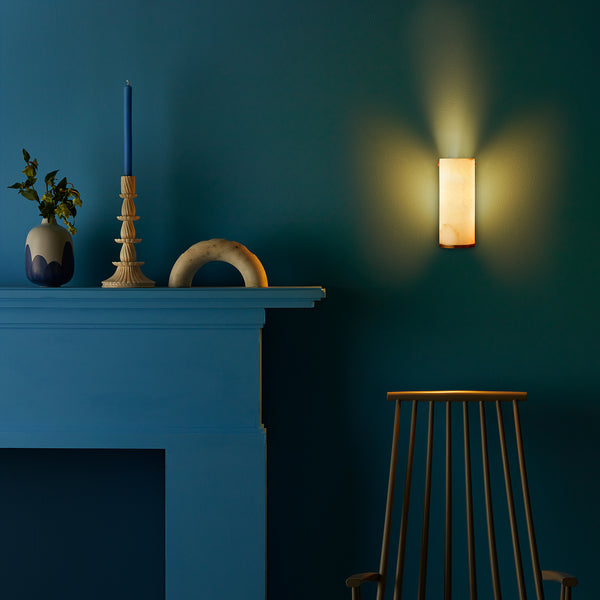
Alabaster lighting is made from a natural, translucent stone that lets light pass through it rather than simply bounce off the surface, creating a soft glow closer to candlelight than a standard bulb or shade. Each fixture is naturally unique, carrying its own veining and tone, and looks sculptural even when switched off, which is why it works equally well in period and contemporary interiors.
Think of this as a gentle, design-led wander through ways to decorate with alabaster lighting, where natural beauty meets everyday practicality and sculptural presence.
What makes alabaster lighting so special?
Alabaster is a natural stone formed over thousands of years, which means no two pieces are ever quite the same. Each fixture carries its own veining, tone and subtle variations that give it quiet personality.
The material is hand-carved or turned into shape by artisans, a slower process than moulding glass or casting metal, and one that shows in the finish, tool marks and slight asymmetries that a machine-made shade would never have.
The veining that runs through each piece doesn't just sit on the surface, it changes how light spreads once the fixture is switched on, so the glow has a subtle pattern to it rather than an even, flat wash.
This is where natural beauty, craftsmanship and everyday practicality meet. Alabaster doesn't just illuminate, it creates atmosphere.
The warm, sculptural beauty of alabaster
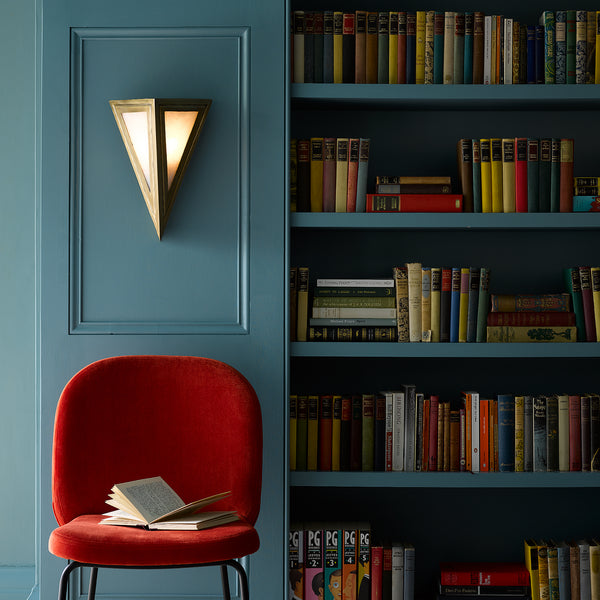
Larger cyrus wall light in antiqued brass
The signature palette is instantly soothing: creamy whites, soft beiges and gentle ambers, all threaded with delicate veining that catches the eye without overwhelming it.
These warm, honeyed tones sit closer to candlelight than daylight on the colour spectrum, which is part of why alabaster fixtures read as warm even before they're switched on, unlike white marble or frosted glass, which stay cool-toned regardless of the light behind them.
Its tactile, organic presence instantly softens sharper contemporary spaces. Hard edges feel less severe. Minimalist schemes gain soul. It's the perfect antidote to cold, overly clinical lighting schemes that feel more laboratory than living room.
Styling alabaster lighting in modern interiors

Luna wall light in klein blue by Matthew Williamson
Alabaster styles well alongside natural materials like linen and wood, in warm neutral palettes, and as a standalone focal point in otherwise pared-back, contemporary rooms. Here's how each approach works in practice.
Pairing alabaster with natural materials
Team alabaster with linen, wool, wood, stone and other tactile, natural finishes. These materials echo its earthy, grounding quality and create conversations between textures.
Build layered, touch-me textures so the stone feels part of a calm, collected whole rather than an isolated fancy object. Jute rugs, linen curtains, oak furniture, ceramic vases - they all speak the same quiet language.
Alabaster in neutral and warm palettes
Alabaster absolutely shines in rooms dressed in creams, taupes, warm greys and gentle earth tones. Its warm glow flatters neutrals and keeps them from feeling flat or chilly.
Pair alabaster with soft, warm metals like aged brass, brushed gold or bronze. Avoid stark chrome or polished silver, which can feel too cool against the stone's honeyed warmth.
Alabaster as a sculptural focal point
Treat key alabaster pieces as you would artworks: focal points to build a scheme around rather than afterthoughts. Keep nearby décor simple so the stone's veining and glow do the talking.
Place alabaster where it can be admired from multiple angles, not tucked away in corners. Over a dining table, on a console visible from the entrance, flanking a fireplace - anywhere it becomes part of the room's architecture.
Mixing alabaster with contemporary design
Alabaster is genuinely beautiful in pared-back, modern and Scandinavian schemes. Its organic softness balances clean lines and sleek surfaces without adding fussiness.
Combine alabaster with simple silhouettes and unfussy furniture for quietly luxurious contrast. Think glass coffee tables, streamlined sofas, floating shelves - let the stone bring warmth to minimalism.
Room-by-room ideas for alabaster lighting
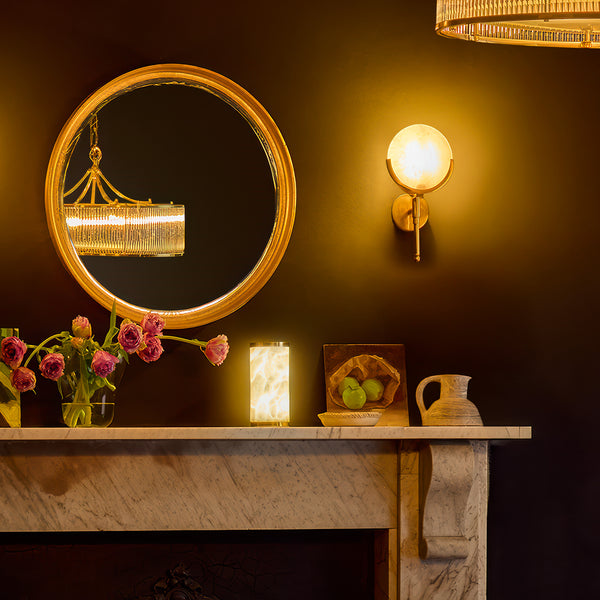
Luxe rechargeable table lamp in alabaster and brass
Here's how to use alabaster throughout your home without overwhelming spaces.
Living rooms: create cosy, elegant atmosphere
Place alabaster table lamps on consoles and side tables for evening glow that makes everyone look wonderful and feel relaxed.
Consider alabaster floor or tall table lamps in reading corners, plus wall lights to frame sofas or artwork. Layer these with other light sources for depth.
Dining rooms: sculptural warmth above the table
Alabaster pendants or chandeliers are natural centrepieces above dining tables. Their diffused light flatters food, faces and table settings in ways harsh downlights simply cannot.
Use dimmable bulbs to shift easily from weekday suppers to long, candlelit dinners. The stone's glow softens as you dim, becoming increasingly magical.
Bedrooms: restful, honeyed glow
Alabaster bedside lamps provide soft, wind-down lighting that signals it's time to relax. The warm glow is considerably more sleep-friendly than blue-toned LEDs.
Alternatively, alabaster wall lights create neat, symmetrical, clutter-free bedside schemes. Choose warm bulbs to lean into the stone's naturally soothing quality.
Hallways: elegant welcome with natural stone lighting
Pairs or runs of alabaster wall lights turn corridors into softly lit galleries rather than functional throughways.
In entryways and stairwells, alabaster pendants set a gentle, luxurious first impression. Guests notice these moments.
Bathrooms: spa-like warmth and organic elegance
Suitable alabaster wall lights around mirrors provide flattering, diffused light that makes morning routines considerably more pleasant.
Use alabaster sparingly as a spa-like accent in otherwise simple bathroom schemes. Too much and it overwhelms; just right and it transforms.
How do you clean and care for alabaster light fixtures?
Dust alabaster lights regularly with a soft, dry cloth, and if a deeper clean is needed, use a barely damp cloth and dry it immediately afterwards rather than leaving moisture to sit on the stone. Avoid harsh chemicals and abrasive cleaners altogether, alabaster is a soft, porous stone, and anything abrasive can dull its surface and affect how evenly light passes through it.
Over time, alabaster develops a gentle patina that adds to its character. Embrace these subtle changes as part of the charm of natural stone rather than fighting against them. Think of it like leather or wood - materials that age beautifully rather than simply ageing.
Why alabaster lighting feels timeless
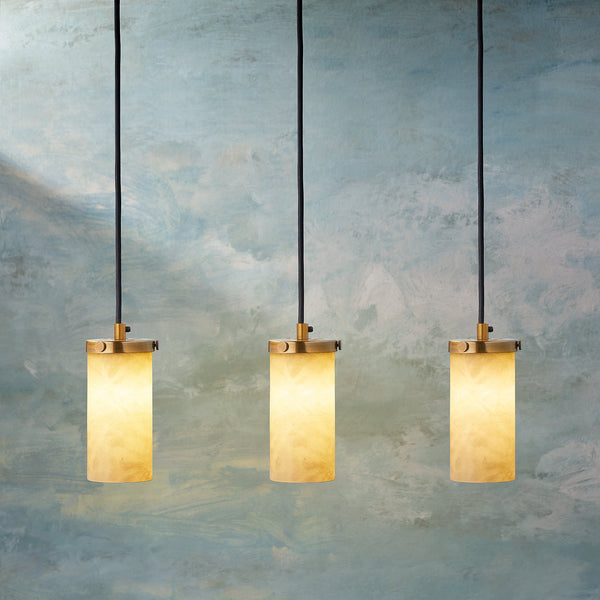
Polly pendant light in antiqued brass with alabaster shade
Alabaster has lit buildings and homes for centuries, yet still feels fresh in contemporary spaces. There's something about its natural beauty that sits above passing trends.
Natural materials tend to quietly earn their keep year after year. They don't scream "2026" or "very last season." They just exist beautifully, improving with age rather than dating.
Position alabaster lighting as an investment in craftsmanship, longevity and atmosphere. And there's sustainable appeal too - natural material chosen to be enjoyed for the long term rather than replaced when trends shift.
Pooky's alabaster lighting collection
We've curated natural stone lighting that brings sculptural beauty and timeless warmth to every room.
Alabaster table lamps
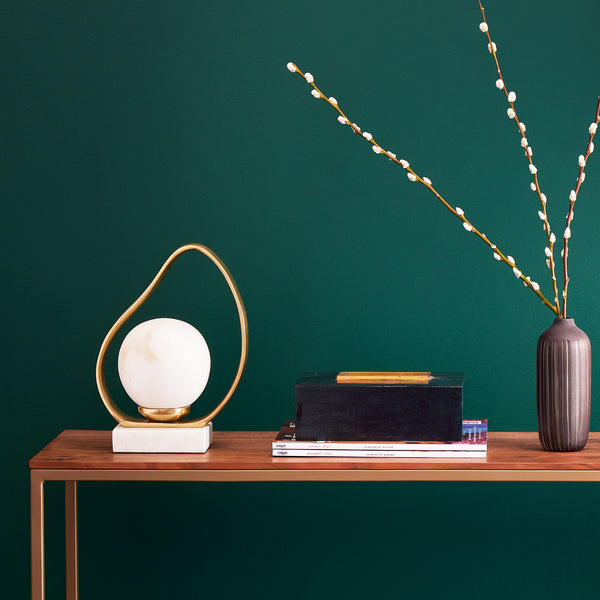
Polyphemus alabaster table lamp
Alabaster table lamps plug in and are fully portable, so they can be moved between rooms without any electrical work. Because they're viewed at close range, this is where a piece's individual veining and colour variation are most visible.Intimate, sculptural pieces that pool warm light over surfaces whilst looking beautiful even when switched off.
Alabaster pendant lights
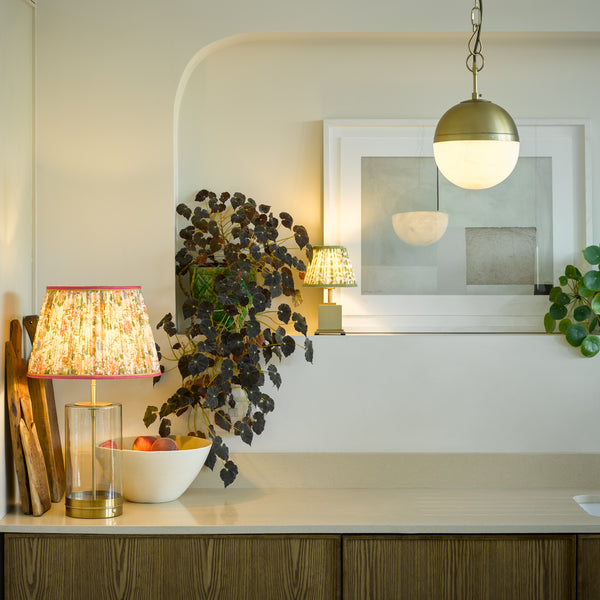
Ceres pendant in alabaster and antique brass finish
Our alabaster pendant lights glow from every angle, making them a natural fit above dining tables and kitchen islands, and rather good in an entrance hall too, where that halo-like glow gives visitors a proper first impression the moment they walk in.Statement centrepieces that glow from every angle, perfect for dining tables and kitchen islands.
Alabaster wall lights
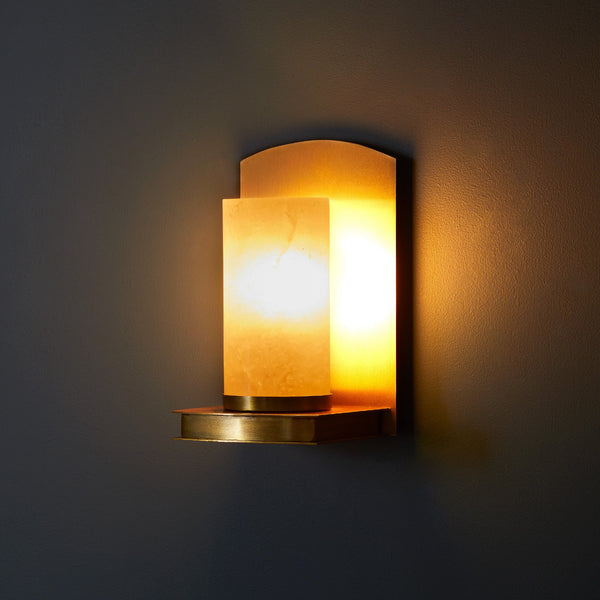
Roly wall light in antique brass with an alabaster tube
Elegant sconces that wash walls with soft, flattering light and add architectural interest. Alabaster wall lights are almost always specified in pairs rather than singly, one of the styling choices we cover in more detail in our guide to alabaster wall lights.
Alabaster chandeliers
The largest and most involved format to install, alabaster chandeliers combine multiple arms, often pairing alabaster with a metal frame, so both the fitting itself and the electrical work involved scale up considerably compared with a single pendant.
Ready to bring alabaster into your own home? Browse our alabaster lighting collection and find the table lamp, pendant, or wall light that suits your space best, or drop us a line if you'd like a hand choosing between them.
FAQs about alabaster lighting
What is alabaster lighting and why is it popular?
Alabaster has been used for lighting and ornamental objects since ancient Egypt and Rome, prized then for the same quality that's driving its resurgence now, the way it glows rather than merely reflects light. Its current popularity is largely a reaction against uniform, mass-produced lighting, since no two alabaster fixtures are ever quite the same, and its warm, tactile presence answers a growing appetite for natural materials over glass, plastic and polished metal.
Is alabaster lighting suitable for modern interiors?
It depends more on shape than the material itself, a rounded, organic alabaster form will read as traditional or rustic, while a clean cylindrical or geometric shape in the same stone reads as contemporary. Choosing a silhouette that matches the room is what really decides whether a piece feels modern or period.
Where should alabaster lighting be used in the home?
Alabaster does best away from constant direct sunlight and high-humidity spots like an unventilated shower area. Prolonged UV exposure can fade its natural tones over time, and sustained damp isn't ideal for a porous stone. Beyond those two practical exceptions, it suits most rooms in the home equally well, the main decision is picking fixtures suited to ambient, mood lighting rather than bright task lighting, since that's where alabaster's diffused glow does its best work.
Does alabaster lighting work in small spaces?
Yes. In small spaces, choose appropriately scaled pieces - a single alabaster table lamp or pair of wall lights rather than a grand chandelier. The warm, diffused glow actually makes small rooms feel more spacious and inviting by eliminating harsh shadows. Alabaster's organic presence adds character without cluttering.
What's the difference between alabaster and marble light fixtures?
The main difference is translucency: alabaster is soft enough and porous enough to let light pass right through it, which is what gives alabaster fixtures their signature glow, while marble is much denser and typically only allows light through when cut extremely thin, so most marble lighting relies on reflected rather than diffused light. Alabaster is also softer and lighter to work with, which is why it lends itself to the sculptural, carved shapes seen in table lamps and pendants, whereas marble is more commonly used for bases, plinths, and structural elements where hardness and weight are an advantage rather than a limitation.